
by Vicki Felmlee
Some years ago I was talking to a local author who had just had his second book published (this was before Amazon’s publishing options were available). I asked him how his books were doing and he indicated his publisher was doing an “OK” job with selling, and he had a few book signings that helped. Beyond that, he said, he wasn’t “very comfortable” putting himself out there.
Fast forward about 25 years and here we are in a new universe of publishing options – and perhaps even obligations. As we all know, there has been a lot of consolidation with the “big ones” and many mid-range, regional, or small publishers are gone. With the advent of self-publishing or “hybrid” publishing, helping authors publish their books for Amazon, Barnes & Noble, etc., authors might still find themselves wondering, “How can I get my book in reader’s hands?” Putting yourself out there can make the difference.
Events can be great ways to sell books, and they will also give you a great opportunity to talk to potential readers at length, ask them what they like to read, and point out excerpts from your book they might be interested in. If you have several books, you’ll also gauge which cover draws them in, which one not so much.
I posted in our WWW groups.io website a few weeks ago my experiences with events where I’ve sold a number of books, events that at first glance might not be the “usual” place for some of your titles. Coincidentally, I read an author’s newsletter (she writes women’s fiction) about the best ways she has found to sell her books. Book fairs and conventions were top of the list, of course, but in the top 10 were also craft fairs and ComicCons.
I did our local ComicCon last September, and I will certainly do it again. It’s not just cosplay and science fiction, they are attended by a diverse and large customer base. I sold a lot of books. I’m looking at an art festival, and there are also two Holiday Craft Fairs – one in November, the other in December. All of these are very affordable and last only one day.
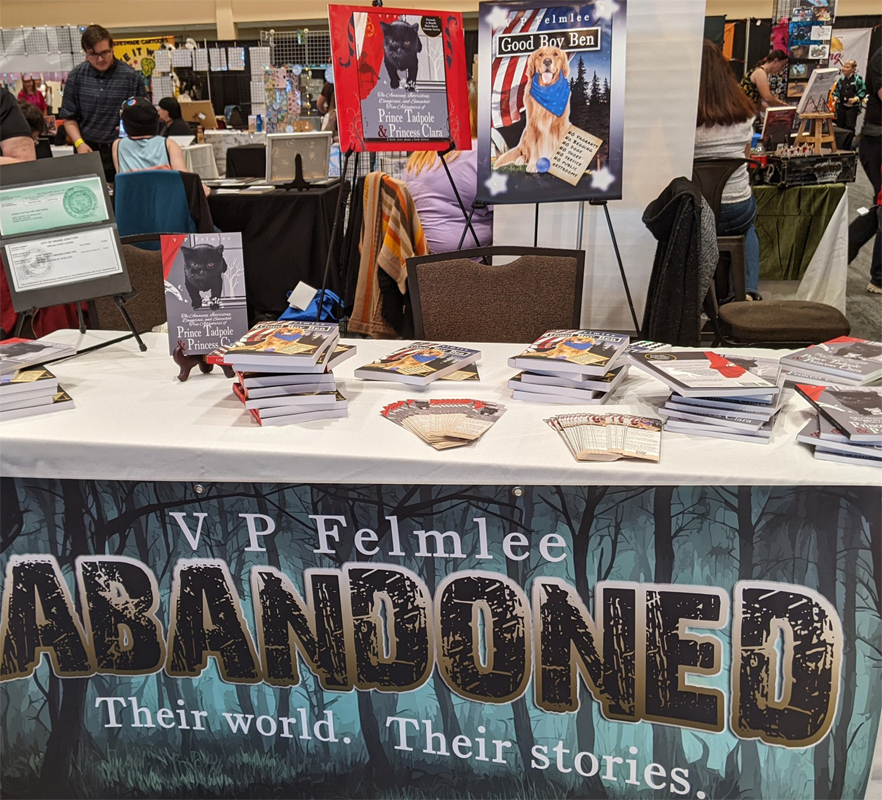
There are other venues worth exploring. One suggestion included car shows, and that spotlights the best advice: Think outside the box!
Some self-disclosure: For many years I have been involved in a variety of public events, from expos to county fairs to a variety of festivals. Sometimes I helped with displays, other times with marketing (and once in a while conflict resolution, oh, the stories I could tell!).
They all have several things in common, and I’ve carried those experiences over to selling books as an author.
How do you find events? Check online calendars and social medai from your local Chambers of Commerce, libraries, museums, city or county governments, service clubs, and tourism organizations.
Outdoor events are risky weather-wise, and bad weather will impact attendance. But if you’re confident, go ahead and book it!
How long is the event? What time does the event open to the public and when does it close down? Are evening hours involved? And, more than one day? County fairs, for example, might be great venues, but they typically last 4, 5, even 6 days and 10-12 hours per day. Many also require somebody to “man the booth” all the time. Do you have help, friends, or family, or perhaps another author or three who can share the time commitment and costing? If you do, your local count y fair might be perfect for you (and, a lot of fun). If your book(s) has a western theme (we ARE Women Writing the West, after all), you might sell lots of books.
Deadlines. Many events might be months away, but deadlines are coming up fast. Check those calendars, make those phone calls.
Costing and Expenses. This is where you, as a business owner, have to do some math (that’s right, you think you’re an author, but you now own a business. Congrats!) . My advice is always keep costs down. You have books to buy (inventory, see below), and probably pay state and local sales taxes. If an event fee is less than $100 for one day, I might be inclined to add it to my list IF they can show there will be good foot traffic. However, less than $50 is better. If you have a publisher, check for bulk discounts and ask if they might help pay some expenses.
Taking Payment/Making Change. You will have to develop a plan and options for taking payment. Cash is always king but consider how you will make change. Many vendors (books or otherwise) simply charge a rounded up figure – $10, $15, $20, etc. – so they do not have to make change with coinage, only paper money. Sales tax is generally included in those costs.
About 60% of my buyers use credit or debit cards. There are several payment gateways, many are well known, from Paypal to Stripe. They are easy to set up and will calculate your sales tax. If you’re new, become familiar with your credit card swiper, and set up the Wifi with your phone before you go to your first event.
Should You Travel? That is up to you, your resources, and your budget. I have met a few authors who travel extensively, especially during the holidays, driving across several states and participating in two or three events per week. Both of them have written several titles, one of them more than 30, so it seems worth their while.
Inventory. That always leads to the question, how many books should you have on hand to sell? You’ll want to ask the event how many people came through the year before. That number might be exaggerated. I always use the 2% rule. If I’m told a thousand people came through, I’ll have twenty each title. Just in case, I might add 10 more. It’s a judgment call, but try not to over-inventory, without running out of books.
Your Booth/Table; Set-Up/TearDown. This is very important, as I’m sure most of you know, and this is where costs can really jump. Banners, posters, give-aways (see below) are always desirable, but do some due diligence, call around and get the best pricing. You might be surprised. A small, local printer might best any online pricing and give you better quality.
Generally speaking, you will have either a table or a booth. Many events include table cloths, but I like to have a couple on hand just in case. You might be up against a wall, perhaps not. The event should provide a map of where you are. A booth typically includes “pole/rod and drape” which means you have two sides and a back. This kind of set up will probably be more expensive, but you have the advantage of “dressing up” your booth as much as you’d like. Google examples, there are thousands, to get some ideas about banners, displays, etc., but again, watch your budget. It will be tempting to buy those beautiful shelves, holders, etc., but maybe wait until you have a few events under your belt before you decide what works best for you.
Wander around and get some ideas about what others are doing, many of them are seasoned pros (and most are very friendly).
I do recommend, however, purchase sturdy and versatile wheeled carts for your books and other materials. That is the kind of investment you and your back will appreciate.
You’ll be given a time to set up and tear down. Events are pretty strict about that, so please accommodate their schedules.
Give-aways. Bookmarks are great, but hand them out as folks go by. If you expect them to be picked up, they probably won’t be. Our wonderful past president, Lynn Downey, gave me a great suggestion: Bandanas. I looked online, found 300 of them for about three cents each. I give them away with the purchase of a book. If a child is looking at the stack with longing eyes, however, I’ll probably relent and give one to him or her – and I always look for service dogs and give one to the owner as well. Another good thing – they don’t weigh hardly anything!
Other Tips.
Sets sell. Astonishingly well, I might add. If you have more than one title, bundle them in some inexpensive jute from a hobby story, maybe add a small seasonal ornament, give a discount, and away they will go.
Dress for success. Some authors dress in period clothing to match the theme of their book(s). It’s a great attention-getter and might work for you.
Stand up. I know it’s hard (and chairs will be provided), but stand up, especially when people approach your booth or table. That one gesture WILL mean the difference between a sale or no sale.
Have Fun! And, Take Pictures. Events are marketing opportunities. Set some goals but make them realistic. You’ll learn a lot, meet readers and other authors, and have fun. Don’t forget to take pictures for your social media, websites, and advertising.
If you have other ideas, and would like to share, add them to comments of this blog. I’d love to hear from you.

Vicki Felmlee received her degree in Geology but took a right-hand turn into journalism, working for newspapers and magazines for more than 10 years. She then returned to her “roots” and worked as an Environmental Scientist for projects in Idaho, New Mexico, and Denver before starting her own company in 1996. She is a former national president of the Old Spanish Trail Association and has been active in community issues. She is the author of The Abandoned Trilogy: Prince Tadpole & Princess Clara; Good Boy Ben; and Autumn and The Silver Moon Stallion. Her fourth novel, In the Dark Night, will be published this fall. Her website is at www.vfauthor.com
 Blog
Blog 