2025 WWW Conference Workshop News

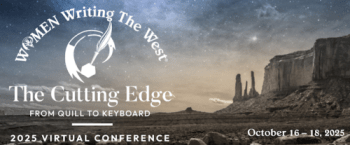
At the 2025 WWW Virtual Conference, Tamara Merrill will lead a workshop on the topic of Writing with AI. Should I? Or Shouldn’t I?

For many writers, AI has reared its ugly head and created more questions than answers. Tamara will discuss this cutting-edge technology that has become part of everyday life; together with ways to determine where and when to incorporate AI into our writing. Participants will increase their understanding of using or not using Artificial Intelligence in the writing process in every genre – fiction, nonfiction, sci-fi, memoir, poetry, essay writing and more.

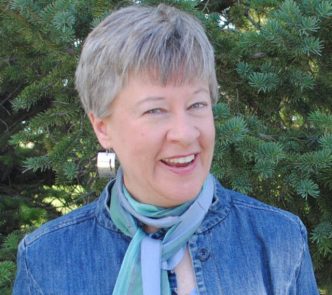
Tamara Merrill is an award-winning novelist and short story writer with a diverse portfolio that showcases her literary talent. She has published one children’s book, seven novels. Her numerous short stories are featured in print magazines, online platforms, and fifteen anthologies. 

A passionate advocate for the craft of writing, Tamara frequently speaks at writers’ events and teaches writing skills in the adult education system. She balances her time between writing, reading, and painting. Her passion for storytelling brings her joy and fulfillment, showcasing her belief that reading and writing can transform lives. 

Registration for the 2025 WWW Virtual Conference is open.

WWW Disclaimer

Creative Mind

Welcome to Women Writing the West Creative Mind.
Let your creative mind take a journey to a new place. The result might surprise you.
Share your creative story in the comments.

WWW Disclaimer

2025 WWW Conference Workshop News

At the 2025 WWW Virtual Conference, take the opportunity to Chat With an Author.

National award-winning author Jane Little Botkin melds personal narratives of American families, often with compelling stories of western women. Her books have won numerous awards in biography, western historical nonfiction, and women’s studies, including two Spur Awards in Biography, two Caroline Bancroft History Prizes (Denver Public Library), the Barbara Sudler Award for best book about the American West by a woman (History Colorado). Finalist awards include Women Writing the West’s Willa Literary Award, Colorado Book Award, Oklahoma Book Award, High Plains Book Award, Foreword Reviews Indies Biography Book Award, the Sarton Book Award in Women’s Studies, and Forewords Reviews Indies Award Honorable Mention in Pop Culture. Her newest book, The Breath of a Buffalo, A Biography of Mary Ann Goodnight, will release fall 2026 from the University of Oklahoma Press.

A member of Western Writers of America since 2017 and past vice-president of its board of directors, Jane judges entries for the WWA’s prestigious Spur Award, reviews new releases, and writes articles for Roundup. A late-bloomer, Jane served as a public-school teacher for thirty years before turning to historical investigation and writing. In 2008 the Texas State Legislature honored her career in education and publication of historical journals by formal resolution. Now Jane blissfully escapes into her literary world in the remote White Mountain Wilderness near Nogal, New Mexico.

Website: https://janelittlebotkin.com/
Facebook: https://www.facebook.com/JaneLittleBotkin
Instagram: https://www.instagram.com/janebotkin/

Registration for the 2025 WWW Virtual Conference is open.

WWW Disclaimer

The Process of Writing My Latest Book

by Carolyn Niethammer

An interesting factor of living a very long time is that events that were part of your life move into the realm of History with a capital H. An internet search defines events that happened in the late 20th century as “near history.”

My latest novel takes place in 1970-1971. That seems so recent to me, but it is 55 years ago. When I studied American History in high school in 10th or 11th grade, fifty years previous took me to a time when horses and buggies shared the roads with a few of the new-fangled cars, women wore dresses to their ankles, and Arizona was still a territory.

The late Sixties and early Seventies must seem as quaint to today’s teenagers as that history did to me. The one thing that has persisted is the music of the era with graying Sixties rock stars still packing music halls and most of the intervening stuff forgettable.

This has all been on my mind the last few years as I’ve finished writing and publishing  Everything We Thought We Knew set on a rural commune.  My intent was to immerse the reader in the times while giving them some characters with concerns typical of the era. 

When writing historical fiction, it is important to support the plot and the action with all sorts of sensory detail and this era offered lots of opportunity. It was such a departure from the previous decade in much more than just the music. In the case of my intent for this book, all that detail wasn’t just background for the plot, it was the essence of the story. 

The label that most often comes to mind for the time is “sex, drugs, and rock ‘n roll.” While it was that, it was much more. The food, the vocabulary, the literature, and the politics were as distinctive as the music. 

The Hippies (for want of a better term) were anti-war and marched in protest against the American involvement in Vietnam, especially when boys they had sat next to in geometry came back in body bags. Like the young people of the day, my characters were deeply invested in stopping the war, but most of them wanted to protest peacefully. They called it Flower Power when they carried flowers to protests and handed them out to the soldiers and police. But sometimes they went too far in their protest and so did my characters. 

Food saw a change. For the traditional family of the Fifties and Sixties , TV dinners were a special wondrous treat though their attraction was their novelty, not their flavor.  I recall coming home from school and mixing up a glass of Tang, a concoction of orange-flavored chemicals and vitamin C formulated for astronauts.  It wasn’t great, but hey, it was astronaut food. 

Meals in communes or Hippie households were a rebellion against all that, eschewing anything fake or processed, often centering around brown rice, something that never appeared on my childhood dinner table. Oatmeal had been around for centuries, but the Hippies transformed it into crunchy granola. And lentils! Households with roots in the Middle East might have eaten them, but I sure didn’t until I landed in a commune. My characters bake their own whole wheat bread and even make their own goat-milk yogurt (popular in Europe but practically unknown in the US).  

I wanted to give readers a clue that these foods were introduced and popularized by the Hippies though they soon made their way out of the health food stores to the regular grocers. 

Every era has its vernacular. Using the right phrases signaled you were hip and in the know.  I wanted to include them in the dialogue but not overdo it. We called things “groovy” and “cool,” something interesting was “far out,” something unpleasant was a” bummer”,  money was “bread”, and the craving for snacks that came from a marijuana high was “the munchies “.  I haven’t called anything groovy in decades, but I still use cool.

In composing Everything We Thought We Knew, I didn’t plan to write the great American novel and probe deeply into the human psyche or motivations. But I did think that the time needed to be documented before we all forgot. I was surprised when an early reader exclaimed, “I’m sure I knew some of those people!” No she didn’t. The characters are all fictional. But they were types, and it was fun that she recognized them. 

Carolyn Niethammer is the author of 11 nonfiction books on the food and people of the Southwest, one of which was a Willa runner-up. Everything We Thought We Knew is her second novel. 
Get to know more about Carolyn on her website, and follow her on Facebook.

WWW Disclaimer

2025 WWW Conference Workshop News

At the 2025 WWW Virtual Conference, take the opportunity to Chat With Publisher, Brooke Warner.

Brooke Warner is a 25-year publishing veteran and the publisher and co-founder of She Writes Press. She is the former Executive Editor of Seal Press, and a podcast host, TEDx speaker, and an active board member of the Bay Area Book Festival and the National Association of Memoir Writers. 

Registration for the 2025 WWW Virtual Conference is open.

WWW Disclaimer