Punctuation on the Range: 

Don’t Shoot Your Sentences in the Foot

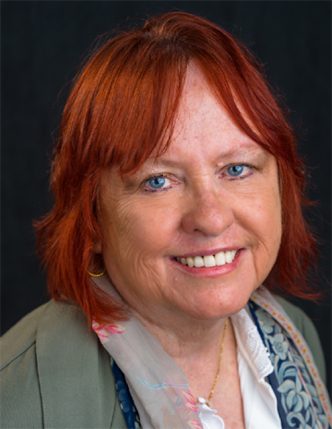
by Rachel Santino

Out on the open range, a cowboy doesn’t ride out without the right gear—and neither should a Western writer. Sure, you’ve got your story, your grit, and maybe a strong cup of coffee, but without punctuation, your words will buck and bolt like an unbroken mustang. Punctuation is your saddle and bridle—it keeps your sentences steady, your meaning clear, and your readers from getting thrown in the dust. Without it, even the best tale’ll lose its trail.

The Comma – The Trail Stop
A comma tells your reader to ease up on the reins—not stop, just slow the horse. It’s a signal to pause, catch a breath, and get ready for whatever’s coming around the bend. Items in a series are also separated by commas.

Example: The sheriff, calm as ever, didn’t even flinch.
Forget the comma and you’ve got one long, breathless ride that loses the reader by the next cactus.

Example:The outlaw grabbed his hat, his gun, and his dignity.
Without commas, it lookslike he grabbed a mess.

The Period – Full Stop, Partner
This one ends the sentence, plain and simple. No fuss, no frills—just like a cowboy’s goodbye.

Example:He tipped his hat. Then he rode away.
Short. Direct. Like a showdown at high noon.

The Semicolon – When Two Ideas Ride Together
Better used in nonfiction. Not quite a period, not just a comma. The semicolon links two related sentences like saddlebags on the same horse.

Example:The sheriff was tired; he’d been chasing bandits since dawn.
It’s classy. It’s confident. Use it when two sentences ride side-by-side.
Note: It’s better to avoid semicolons in fiction. Use a period instead.

The Colon – Open the Corral Gate
In nonfiction, a colon sets the stage for what comes next. Whether you’re introducing a list, offering a definition, or delivering a punchy point, the colon opens the gate and lets the next idea ride through with purpose.

Example: There are three things every successful Western writer needs: a clear voice, a firm grasp of storytelling, and punctuation that rides steady.
Note: It’s better to avoid colons in fiction. Use an em dash instead.

Hyphens and Dashes – Not the Same Horse
Hyphens are for hitching words together.

Example: She was a quick-draw artist and a well-known sharpshooter.
En dashes are approximately the length of the letter N. Use these to mark ranges for the meaning “to.”

Example: 1877 – 1887

Em dashes are approximately the length of the letter M. They are great for interruptions, emphasis, or surprise.
Example: He had one rule—no varmints in the saloon.

Parentheses – Whispered Side Notes
Parentheses are like the grizzled prospector in the corner of the saloon, adding his two cents without interrupting the story.

Example: She aimed (not that she needed to) and hit the bottle clean off the fence.
Just don’t overuse them—they’ll start sounding like gossip around the campfire.
Note: It’s better to avoid parentheses in fiction. Use commas instead.

Quotation Marks – Talk of the Town
Use quotes to rope in speech or borrowed words.
Example: “You best be careful where you ride,” the old rancher warned. “That trail don’t take kindly to strangers.”
Quotes show who’s speaking—without them, you’re just hollering into the canyon.

Example: Everyone in town called her a “greenhorn,” but she could outshoot any of ’em by sundown.
When using slang, nicknames, or words you’re lifting directly from someone else’s mouth—or another source—quotation marks show the term isn’t yours. It adds character and keeps your writing honest.
Note: Within dialogue, use single quotes.

Apostrophes – Claim Your Territory
The apostrophe shows possession—or that a word’s been shortened, like a cowboy cutting corners on conversation.
Example: That’s Jed’s horse. (Belongs to Jed.)
Example: Did you see ’em? (’em = them)
Just don’t mix up its (possessive) and it’s (it is). That mistake’ll get you kicked outta camp. 
Note: All apostrophes are curved to the left, never to the right. Commonly found in ’em, ’bout, and ’til. They point the way of the missing letter(s). When using numbers for decades, never use an apostrophe. Those years are always plural and never possessive (1870s, NOT 1870’s).

Spaces – One is Plenty
Back in the typewriter days, double-spacing between sentences was a necessity. Nowadays, it’s about as useful as a screen door on a chuckwagon. One space after punctuation is enough—don’t go doubling up like it’s 1985.

Before You Ride Off – Mind Your Marks or Risk a Misfire
In the West—or on the page—it’s all about precision. Use your punctuation right, and your story hits true every time.

Ariticle written by Rachel for the Will Rogers Medallion Award website’s Tips and Tidbits for Writers column.

Rachel Santino

Editorial Services | Armadillo Editing

www.armadilloediting.com

WWW Disclaimer

A New Book Released From Gaye LaRane

Black Spruce Cove Alaska

Remote. Wild. Mysterious. No place Ivy Phelonsen would choose, even to visit. But for now, the tiny, coastal Alaskan community of Black Spruce Cove is her home.

March 2001. Ivy Phelonsen is a successful museum marketing director in Anchorage, Alaska. Her husband, Stan, is a partner in one of the most prestigious accounting firms in the state. They enjoy everything that money and social privilege can provide. Nothing seems out of reach, including Ivy’s life-long dream to own her own art studio.

But Stan ruins Ivy’s perfect life when he embezzles from his accounting firm, drains the couple’s bank accounts, and disappears with his female assistant. To make matters worse, when the museum learns that she is a suspect in Stan’s crimes, she is fired.

Feeling that she has no other options, Ivy changes her name and accepts a job in the remote coastal community of Black Spruce Cove, Alaska.

Gaye LaRane writes about the creative and eccentric humans living in the rugged environment of The Last Frontier. Her stories are inspired by the strong, adventurous, independent spirit of modern pioneers living with active volcanos, melting glaciers, and jolting earthquakes.

Gaye’s book is available on Amazon
Followed Gaye on Instagram @gayelarane

WWW Disclaimer

2025 WWW Conference News

The WWW Conference Committee is pleased to announce Dr. Jacob K. Friefeld will be the Keynote Speaker at the 2025 WWW Virtual Conference.

Dr. Jacob K. Friefeld is the Director of the Center for Lincoln Studies. He came to the Center from the Abraham Lincoln Presidential Library and Museum and his research has focused on Abraham Lincoln’s western legacy. His recent book, co-authored with Richard Edwards, The First Migrants: How Black Homesteaders’ Quest for Land and Freedom Heralded America’s Great Migration, tells the epic story of Black Americans homesteading in the Great Plains after the Civil War.

The First Migrants was praised as the first account of Black homesteading and recognized for its contribution for understanding the American West.

  • Winner of the Denver Public Library’s 2024 Caroline Bancroft History Prize
  • Winner of the 2024 Nebraska Book Award
  • Finalist for the 2024 Spur Award
  • Finalist for the 2024 ASALH Book Prize
  • Honorable Mention for the 2024 Jon Gjerde Prize

His first book, Homesteading the Plains: Toward a New History, examines the Homestead Act of 1862, one of the most important social policies ever enacted in the United States.

Registration for the 2025 WWW Virtual Conference is open.

WWW Disclaimer

Coming Soon

Do you know an student who would like to enter the WWW High School Writing Contest? Share the information and link with educators, students, and home school families.

Submission Highlights

All high school students in grades 9-12, ages 13-19 worldwide, are invited to submit.

Send unpublished short written works in nonfiction, fiction, or poetry/songwriting to the Women Writing the West® High School Writing Contest.

All entries must be submitted in English.

Entries accepted August 15, 2025 to September 30, 2025.

No entry fee.

Complete guidelines can be found on the WWW High School Writing Contest page.

Entries should recognize women’s and girls’ stories and their contribution to the history, culture and growth of the North American West, defined by WWW as anywhere on the North American continent west of the Mississippi River, including Alaska and Hawaii, Canada west of Ontario, and Mexico.

WWW Disclaimer