By Melissa L. Sevigny
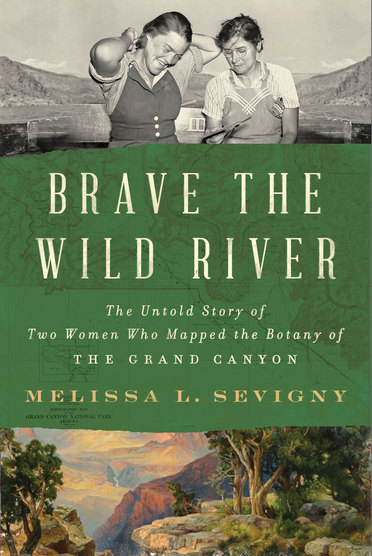
Recently, a reader asked how I got access to the archives I used to write my book, Brave the Wild River: The Untold Story of Two Women Who Mapped the Botany of the Grand Canyon.
“I walked in,” I said. Often, it’s as easy as that—walking in the door of a university, museum, library or other repository and asking questions about what you’re looking for.
Archival research can seem daunting, but it’s also a rich source of hidden stories—particularly about Westerners whose voices have been overlooked, suppressed, or lost, such as women and Black, brown, or Indigenous people.
There are plenty of fascinating historical characters who don’t fit the cliché of the Western cowboy. Brave the Wild River grew out of the diaries of Lois Jotter and Elzada Clover, two Michigan botanists who ran the Colorado River through the Grand Canyon in 1938, and had the foresight to keep detailed records of their adventures.
One of the gifts of archives is that they’re full of material that can’t be found with a Web search—things like handwritten letters, photo albums, and physical artifacts. My book, a work of narrative nonfiction, was based almost entirely on archival material located at Northern Arizona University, the University of Utah, the Huntington Library, and elsewhere. Archives can also be useful places to find insights, quotes, or gritty historical details for memoir or fiction.
A good place to start, if you’re new to archival research, is Archives West. A keyword search will bring up hits from collections in multiple Western states. Check the finding aid for a list of the specific items in the collection. (Note that unprocessed collections won’t have finding aids yet, but may still be available to researchers.)
Archivists can sometimes fulfill requests for digital copies, or you can make an appointment to visit in person. Generally, anyone can access an archive. (The Huntington Library, which has an enormous collection of Colorado River material, is an exception: you have to provide proof that you’re undertaking serious scholarship before they’ll let you in.)
Beyond the big archives at universities, you can also check local libraries, museums, and historical societies. I was able to get in touch with family members of one of my characters, Elzada Clover, by reaching out to the historical society in the county where she was born.
When in doubt, ask questions. Archivists and librarians are incredible founts of information, and cheerfully fulfilled many bizarre requests from me during the course of my research, such as a 1938 Rand McNally map of Arizona and a copy of the old guest registry at Rainbow Bridge National Monument.
Some tips if you’re working with archival material: Original, first-hand accounts are fascinating to read, but don’t take them at face value. Nobody is a perfectly objective observer of events, so consider the context, and see if you can compare multiple accounts. Nineteenth- and early-twentieth century newspapers weren’t particularly reliable, so be alert for sensationalism. Lastly, take care with culturally sensitive material. Indigenous stories, for example, were sometimes written down by white anthropologists without permission, and may not be appropriate to share.
For inspiration, some of my favorite recent books that draw heavily on archives are Loren Grush’s The Six: The Untold Story of America’s First Women Astronauts, Morgan Sjorsen’s Path of Light, in which the author retraces a 1920s Glen Canyon expedition; and David Baron’s The Martians, which describes how an Arizona astronomer sparked our obsession with aliens.
Writers don’t need special training to draw from archives. Mostly, this kind of work requires curiosity, patience, and good organizational skills. One of the most meaningful archival items I found when writing Brave the Wild River was a 1938 NBC interview with Elzada and Lois that was conducted on the South Rim of the Grand Canyon.
I had nearly given up on locating it; then an inquiry to the Library of Congress returned the news that they still possessed the original reel. I was able to pay an engineer to digitize it for me. Hearing the voices of my characters—not metaphorically through their written words, but actually with my ears—was both eerie and thrilling. Archival work sometimes feels like a treasure hunt, and moments like that one are gold.
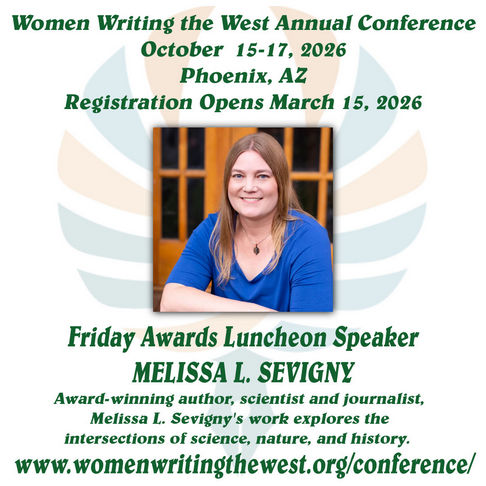
I’m delighted to be speaking at the Women Writing the West conference in Phoenix, Arizona on Friday, October 16. I’ll be sharing more of Elzada and Lois’s amazing story, and you can hear their voices for yourself.
2026 Annual Women Writing the West Conference registration portal
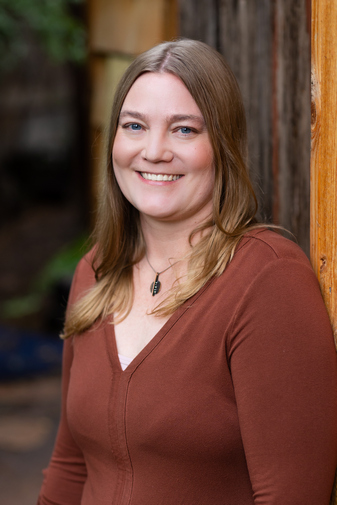
…is a freelance science writer, poet, and author of three nonfiction books, most recently Brave the Wild River, winner of a National Outdoor Book Award. Her work focuses on the intersections of science, nature, and history, and has appeared nationally on NPR, the New York Times, High Country News, and elsewhere. She lives in Flagstaff, Arizona.
Thanks for reading! Scroll down to join the discussion.


An excellent post, Melissa! I agree that archival research is such a great and often untapped resource. I was president of a small mountain-town archives for 8 years and I still miss my weekly visits there with acquiring new items, cataloging photos and of course reviewing all our holdings.
I look forward to your presentation at the WWW Conference!
LikeLike