

By Eilene Lyon
Note: I am not an attorney—and I don’t play one on television, either!
If you are working toward getting your first book published in the traditional press, the time will come when you need to negotiate a contract. If you do not have an agent, I caution you to tread carefully.
In reading through my first contract offer from a small press (part of a much larger company), I noted that it substantially favored the publisher. The following advice reflects what I learned from negotiating better terms: what went well, and what I wish had gone better.
Contracts
My initial advice is DO NOT just read and sign what the publisher sends you.
Must you hire an attorney? That is a good idea, but might be over your budget. I decided not to hire one, but I did not know what was negotiable and what was not. I sought assistance in two places.
First: I joined the Author’s Guild (AG). For the price of a one-year membership, their in-house legal department will review your contract for FREE. They will make recommended changes to your benefit. The result is not necessarily balanced, but skewed more toward the author. They may take up to six weeks to do a review, but I got mine back in less than a day.
Second: I did not have an agent, but I had communicated with one who reviewed my book proposal, offered suggestions to improve it, and declined to represent it. I contacted her again and asked if she’d be willing to work for a fee to review the contract (both the original and the AG-suggested changes). She agreed.
The agent added some boilerplate language, and modified some of the extreme AG positions to create a final version that was balanced and likely to be accepted by the publisher. I paid her for two hours of her time, which included a phone call to discuss her suggested alterations.
Some of the contract sections we modified:
- Grant of rights and territory.
- Number of free copies to the author (get at least 25)
- Author’s warranty and indemnity
- Failure to deliver and unacceptable manuscript
- Royalties
- Future editions
- Publisher termination
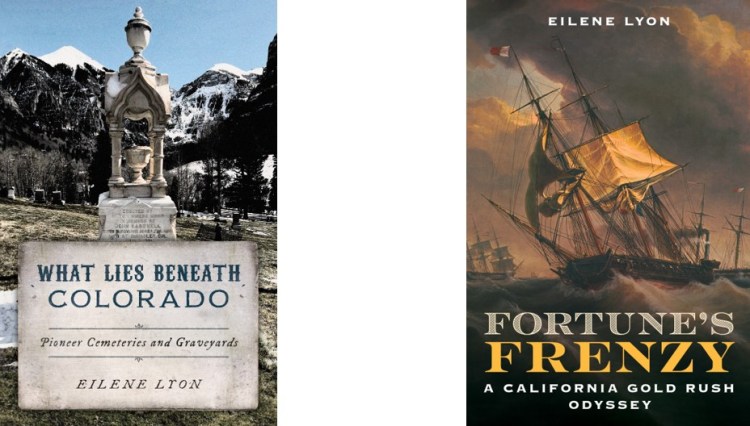
One item I failed to address was the end matter. I write nonfiction history. An index is essential for this type of work. My first book, Fortune’s Frenzy, ended up without one. I thought my second book contract (same publisher), for What Lies Beneath Colorado, had an appendix which included the index. I missed the fact the publisher had deleted that appendix. Unfortunately, I wound up agreeing to pay the cost to ensure my second book included the necessary index.
Titles
Before presenting my contract changes to the publisher, I had another issue to deal with. They disliked my working title. They put their own title idea on the contract: frankly an awful, long, academic-sounding one. This did not reflect my book well and I felt it would hinder sales.
The acquisitions editor said, “Oh, we can change that later. Go ahead and sign the contract.” No way! I worried—probably with merit—that I would not be able to get a good title in the end.
I spent an evening with a partner brainstorming short, catchy book titles and subtitles. In the end, I had two lists with 23 of each. I indicated my preferred titles and subtitles. I sent the lists to the editor and said, “Pick one from each and we’ll go with that.”
That is how Dust to the Devil became Fortune’s Frenzy: A California Gold Rush Odyssey. With the new title and the final edits via the agent, we had a contract.
Blurbs and Cover Art
There were two final negotiations regarding my first book, both about the cover. While the contract specified “The Author will provide meaningful consultation as it pertains to the title, jacket, jacket copy, and catalog copy,” the publisher retained the final say-so.
The publisher never informed me about deadlines for putting blurbs on the cover. When I asked, they said it should have been done long before. I did manage to get one long blurb on the back. I learned my lesson and did much better on the back cover for the second book.
Two front cover layouts I received for Fortune’s Frenzy made it clear that the designers knew nothing about my story, and even less about the California gold rush. After I explained what I thought needed to be on the cover, the editor said I’d have to choose from their Getty Images account.
Getty did not have what I wanted, so I scoured the internet and found the perfect art—royalty free. Still, they resisted making a change.
I’m not proud of what I did next, because it definitely caused a small rift with my editor. But, it did get me the cover I thought the book deserved. Having no obvious recourse in my contract, I simply told her, “Do you want me to try selling a book that I hate the cover of?”
The publisher was fine using my own photography for the cover of my second book. I sent them five or six to choose from, stating which one I liked best. That is the cover art and I’m pleased with how the book turned out, overall. They even used my suggestion for interior formatting.
In summary, be sure to get professional reviews before signing ANY publishing contract. Think carefully about what matters most to you and try to ensure those things are included (e.g. indexes!). Stick up for what you think the title and cover should be. Trust your vision and fight for it. It matters.
Feature image: by Vitaly Gariev on Unsplash

…is the author of Fortune’s Frenzy: A California Gold Rush Odyssey, winner of the Will Rogers Bronze Medallion and Spur Award finalist, and What Lies Beneath Colorado: Pioneer Cemeteries and Graveyards. She skis, hikes, and writes in Durango, Colorado. You can find more of her history writing (among other topics) on her Myricopia blog. She is the Treasurer for Women Writing the West.
Thanks for reading! Scroll down to join the discussion.


I’d love to know if you found this post helpful (or just interesting).
LikeLike
Thanks for the info Eilene. I will follow your advice for my Out Sketching book. Coming up soon I hope.
LikeLiked by 1 person
I look forward to seeing the final version. Have you been shopping for an agent or publisher?
LikeLike
Not yet. I’m polishing right now and hope to be finished by the end of the year. Also researching possible publishers, making a list, writing a proposal and all the little things that go into the project.
LikeLiked by 1 person
I wish you well on that journey, Jan!
LikeLike
Excellent advice. The attorneys with the Author’s Guild are super and know the business of a contract. However, as they will tell you, there is a good chance you won’t get what you ask for in most things. That is the hard truth. Just be very careful.
LikeLike
That was why I sought out additional advice. I did not know how much of what AG recommended might even be considered by the publisher. I think agents have a better feel for that than an inexperienced author. I was glad she was willing to help me for an hourly rate.
LikeLike
Also, the publisher did accept all the changes recommended by the agent.
LikeLike