

By Margaret Mizushima
“We love your characters, we love your setting, we love your writing, but we don’t like your plot.” Years ago, these words came to me in an email from an editor who’d agreed to read my manuscript featuring Deputy Mattie Cobb, her K-9 partner Robo, and veterinarian Cole Walker.
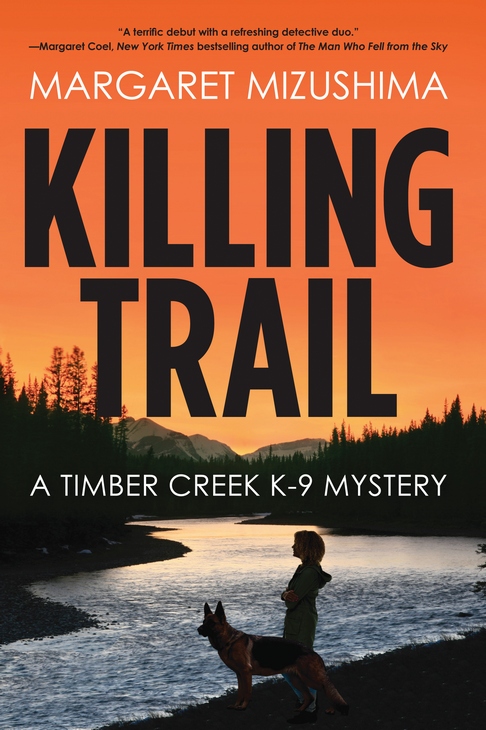
I’d spent years writing, revising, and polishing multiple drafts of this suspense novel before finally attracting an agent who wanted to represent it. I was so excited to partner with this agent, and we had worked together to revise and polish my novel again. We’d weathered some rejections, still revising when we thought editorial feedback made sense, and still continuing to submit to other editors. But what now? Another rejection?
Turns out, at that time this publishing house was most interested in acquiring traditional mysteries. But because they loved the characters and could imagine them being perfect for a traditional police procedural, they offered a revise and resubmit. I figured I had nothing to lose but time. And I loved my characters too.
It took about three months to restructure my plot from suspense to mystery, but after I did, my publisher offered a two-book contract. Thus began a team relationship that has lasted over ten years. Fortunately, enough readers have also loved the Timber Creek K-9 characters to keep this series going. We’ll launch our eleventh episode, Fighting Edge, on September 8 of this year.

Finding an agent and selling this novel wasn’t beginner’s luck, and it was definitely not my first rodeo. I had attended writing conferences for over ten years and had written four other manuscripts before finally connecting with my agent. I’d practiced pitching and succeeded many times at getting that treasured response of, “Send me the first three chapters and a synopsis.” But this book was the first one that resulted in an offer for representation. The writing improved over the years with practice, but what else made the difference with this fifth one?
The characters in this manuscript had sold the book, not necessarily the story itself. Instead of finding my characters and developing their personalities as I wrote like I’d done before, in this book I had used other methods. There’s nothing wrong with finding out who your characters are as you write, many New York Times bestselling authors do. But it wasn’t working for me.
I’d taken classes focusing on character development before. But prior to writing Killing Trail, my first Timber Creek K-9 Mystery, I decided to laser focus my study on character development and methods that other authors use. I studied how-to books and attended workshops specifically on building characters. I also found an intensive one-day workshop near my home presented by Debra Dixon, author of GMC: Goal, Motivation, and Conflict: The Building Blocks of Good Fiction.

In this must-have book on my shelf, Dixon outlines her method for building memorable characters. GMC is the number one method I recommend for fiction writers to learn. I’ll share this how-to in my Women Writing the West Summering workshop scheduled for August 19th. I’ll also share a character profile that I designed which incorporates GMC.
But to add further depth to my protagonists’ profiles, I assigned them both a personality type on the Enneagram, an ancient Sufi method for studying human behavior related to personality. In present day, some psychotherapists and corporate team leaders use this method to help individuals understand themselves and how their perceptions impact their interactions with others. But you don’t have to be an expert to apply this typing system to developing characters, and we’ll discuss how it can be done in my workshop.
As my acquiring editor predicted, I’ve found that over the years of writing a dozen books featuring these characters, I can place them into any situation and setting. I attribute that to knowing their world views, their flaws, and their basic personality traits even as they grow and change with each episode.
I invite you to join me via Zoom on August 19th when we’ll discuss how to create characters who are fully formed before you write a single word in chapter one.
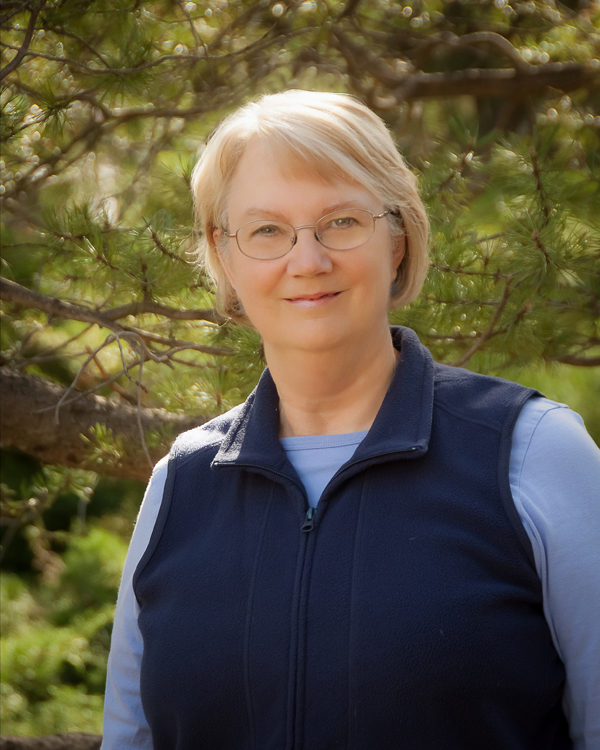
…writes the internationally published Timber Creek K-9 Mysteries. She served as a past president of the Rocky Mountain Chapter of Mystery Writers of America and was elected Writer of the Year by Rocky Mountain Fiction Writers. She is the recipient of a Colorado Authors League Award, a Benjamin Franklin Book Award, a CIBA CLUE Award, an IBPA Gold Award, and two Willa Literary Awards by Women Writing the West. Find her also on Facebook/AuthorMargaretMizushima, X @margmizu, Instagram @margmizu.

