
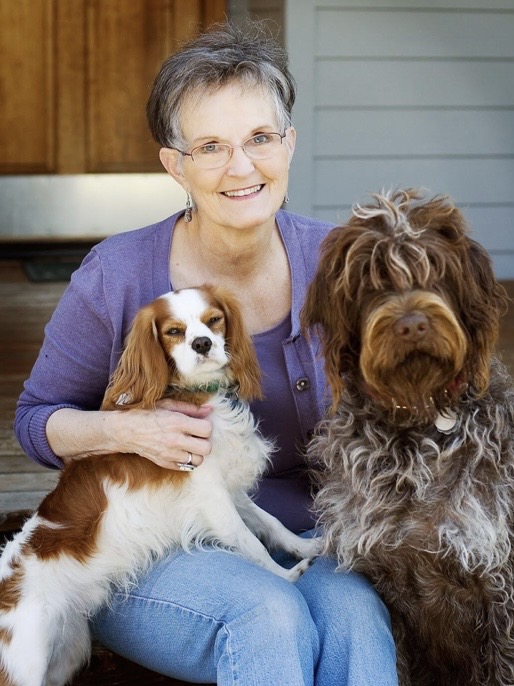
An Interview by Elizabeth Simmons
Jane Kirkpatrick is a New York Times and CBA bestselling author whose deeply researched historical novels have brought overlooked women and true events to life for decades. In this interview, she reflects on traditional publishing, the diversity of the American West, the changing landscape of Western literature, and the advice she would offer the next generation of women writers.
Elizabeth Simmons: You have built a remarkable career as a traditionally published author. Looking back, what has been the greatest reward and the greatest challenge of working with traditional publishers?
Jane Kirkpatrick: Thank you for asking. The greatest reward is having a team that doesn’t want you to fail and actively works through editing, marketing, sales, and other areas to make the book I’ve submitted the best it can be. Every editor I’ve had has made the book better, but I assume that’s true of independently published works as well.
The greatest challenge is that, with many voices at the table, an author has to choose which battles to engage in. Sometimes I don’t get the title I like best or the cover art I think is better than what we finalize, but I have deferred to the wisdom of others, and mostly, they’ve done me well.
ES: Publishing has changed significantly since your first book was released. What advice would you give writers who hope to build a lasting career in traditional publishing today?
JK: Write the story of your heart rather than what you think a publisher wants, because by the time the work is acquired, the market may well have changed. But a heart story stands the test of time—and the vagaries of publishing.
I also encourage writers to look at smaller presses, which may be more willing to try new authors. The big publishers seem to navigate toward the sure thing. You’d think they were big enough to risk a new line or a new author, but it doesn’t seem that way.
I also encourage people to attend conferences where agents and editors are brought in so an author can have a face-to-face conversation. Do the homework ahead of time to see what those professionals are looking for and decide which people to spend time with. You’re really hoping for a lifelong relationship, and that requires some courting time.
ES: Women have always helped shape the American West, although many of their stories were overlooked for generations. What continues to draw you to these women, and why do their stories still matter?
JK: Initially, I was drawn to biographies of Western women, but it was so difficult to find data. Newspapers covered the men who founded a city or who did something remarkable, but often the article didn’t even mention the women in that man’s life—his wife or daughters—by name.
One of my titles, One More River to Cross, grew from a footnote that quoted a man finding a cabin where eight women, seventeen children, and James Murphy spent the winter. If he hadn’t included the man’s name, I would never have been able to trace those women or find out why they were there.
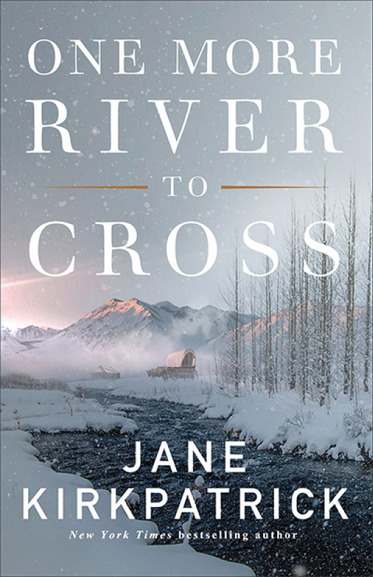
Eventually, I realized that biography tells you what someone did and when they did it. Fiction allows one to explore why they did it, their motivation, and how they might have felt. One of the purposes of fiction is to move people.
I’m drawn to these women whose stories are inspirational and whose lives might well be lost but for that fictional speculation. The stories still matter because they teach us how to be resilient, deal with grief, dream, recover, and move forward. Those lessons speak to our very contemporary lives.
ES: The American West was shaped by Native peoples, pioneers, immigrants, formerly enslaved people, cowgirls, ranchers, miners, merchants, missionaries, farmers, outlaws, and many others. How do you approach that complex and diverse history with honesty, compassion, and respect?
JK: One of my early editors encouraged me not to be afraid to explore class distinctions and relationships of all kinds. Who leaned on whom? Who could you trust? Who betrayed?
I’ve written in the voice of a Black woman and of a Native woman. A radio interviewer asked what right I had to tell a Native woman’s story when I wasn’t one. I said I also gave men voices, and I wasn’t one of those either.
I said I did my research and realized that the winners tell most of history, so we should view it with a cautious eye. It’s also true for me that the mix of people who shaped the West invites me to ask, “What do we have in common?”
I also relied on my Native women friends and descendants, when possible, to help me stay true to the story and the character. I told a Native archivist what that interviewer had said, and the archivist replied, “You didn’t write a story about an Indian woman. You wrote a story about a strong woman who happened to be an Indian.” I took that as humbling praise.
ES: Historical fiction requires writers to balance documented fact with imagination. How do you decide where history ends and storytelling begins?
JK: It’s in the part where fiction and biography diverge. I try to find out as much as I can about documented fact, or what I call “shared knowings.” I’m there when I keep reading and encountering the same facts. I’ve found what most people, historians, and family members know.
Then the imagination takes over because I usually don’t have actual letters or diaries. I have oddities: a program for a concert that a relative saved, ephemera, a keepsake from the 1905 World’s Fair, or a court record that reported who bought a woman’s child’s bed when she lost everything at auction because she was a Black woman, not a widow.
What did that 1905 souvenir mean? What did it say about the character? A white neighbor bought the bed—the same neighbor who shared the wagon train with my character. That bed was later given to the museum by the Black woman, so she got it back. That tells me something about the relationships that mattered.
Also, I don’t think the history ends. It gets woven into the story. Sometimes it’s after the book is published that I encounter a precious tidbit of knowledge and wish I’d had it earlier. But if I hadn’t written the novel, that piece of data might never have been shared.
Part 2 will run July 30, and Part 3 on August 1.
About the Interviewer:
Elizabeth Simmons is a writer and interviewer whose work includes poetry and short fiction for literary magazines.
Thanks for reading! Scroll down to join the discussion.


Thank you for this, I appreciated the chance to learn more about Jane’s works and views. I think this was especially well said: “Eventually, I realized that biography tells you what someone did and when they did it. Fiction allows one to explore why they did it, their motivation, and how they might have felt. One of the purposes of fiction is to move people.”
LikeLiked by 2 people
I agree—especially since I’m working on a biography now. We can speculate, and use their own word to explain (but they may not be reliable narrators!).
Jane has a lot of excellent advice in this interview.
LikeLike
Thank you, C.M. :) I’m glad you appreciated it. I also thought that distinction between biography and fiction was especially meaningful. Fiction can help readers understand a person’s emotions and motivations in a way that facts alone sometimes cannot understand.
LikeLiked by 1 person