An Interview by Elizabeth Simmons
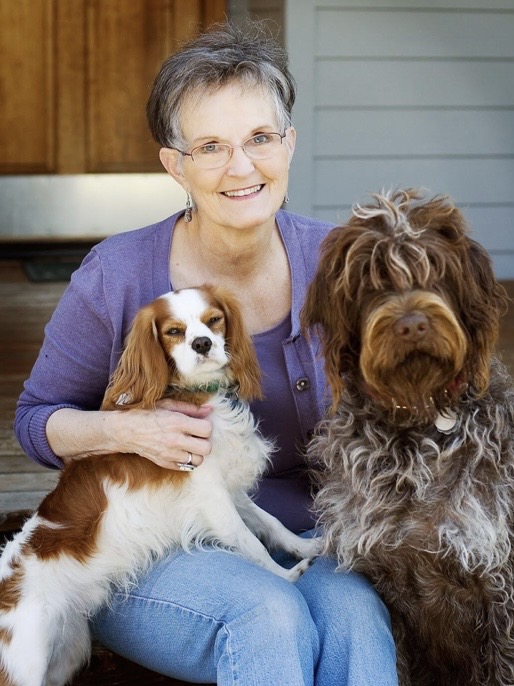
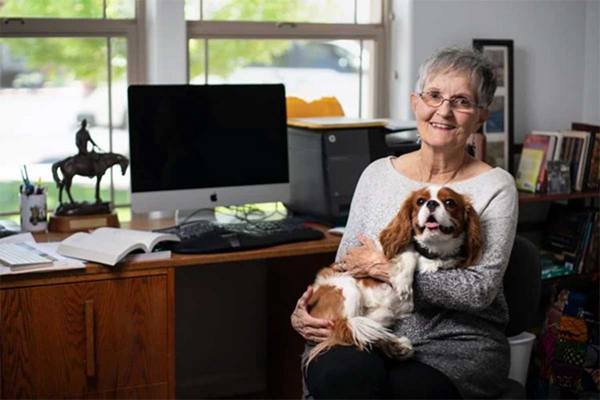
Jane Kirkpatrick is a New York Times and CBA bestselling author whose deeply researched historical novels have brought overlooked women and true events to life for decades. In this interview, she reflects on traditional publishing, the diversity of the American West, the changing landscape of Western literature, and the advice she would offer the next generation of women writers.
Elizabeth Simmons: Research is one of the hallmarks of your work. What does your research process look like, and how do you know when you have learned enough to begin writing?
Jane Kirkpatrick: See above about the shared knowings. I think of research in three threads.
First, go there. I try to visit the places where my character spent time, study the landscapes, and imagine how they nurtured or challenged the character.
Second, scour the documents—census records, court recordings, newspaper articles, interviews contained in museums, libraries, or historical societies, and interviews with descendants, if possible.
One of my books took me to Hudson’s Bay records from the 1700s online. Another took me to the Cut Beef Records of the 1850s, when Native people were kept on reservations and given food—cut beef. To ensure that no one got more beef than allowed, the Army kept a list of family members, which became a kind of census record.
Finally, I study ephemera, which are historical items that are not documents or maps: jewelry, furniture, souvenirs, and other objects.
I also create a timeline of important events in the character’s life based on those documents, death certificates, and other records, and try to identify the turning points in their lives. Then I make a timeline of what else was going on in the wider world and speculate about how that might affect the story.
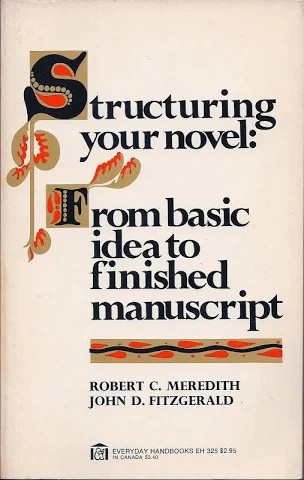
Then I answer three questions from the book Structuring Your Novel by Meredith and Fitzgerald. I might take many pages to answer the three questions, but I try to get each answer down to one sentence.
- What is my intention? The corollary is, “What is this story about?” This is the elevator question. You have one floor to tell someone what you’re working on.
- What is my attitude toward this story? What do I feel deeply about?
- What is my purpose in telling this story? How do I hope a reader will be changed by reading this work? Another way to ask it is, “What am I trying to prove by telling this story?”
After I get my single-line answers to those three questions, I post them at the top of my computer. When I get lost or start to wonder why I ever thought I could write the story, I can look up and remind myself.
It also helps keep me from going too far off the story and disappearing into rabbit trails by asking, “How does knowing which colors Crayola had in 1911 help this story?”
ES: Aside from Western and historical fiction, what kinds of books do you enjoy reading? Have genres such as literary fiction, mystery, science fiction, fantasy, or horror influenced you as a storyteller?
JK: Horror, not so much, though I highly recommend Stephen King’s book On Writing.
I love British mysteries by authors like P. D. James and Anthony Horowitz, the latter for storytelling and the addition of humor. Craig Johnson’s Longmire-related books are a must.
I don’t find myself engaged in science fiction, though I loved Molly Gloss’s science-fiction works. Literary fiction, yes, but most of all historical fiction à la Sandra Dallas, Michael Zimmer, and many of our Women Writing the West member books.
I read a lot of nonfiction, both for research and inspiration. Susan Tweit’s works about deserts, landscapes, and life are treasures.
ES: Do you have any favorite Western films or television series, classic or modern, that you feel capture the landscape, history, or spirit of the American West particularly well?
JK: I have liked Longmire and wish it were still a series. Dark Winds, I think, does a great job of storytelling with Native characters.
I haven’t gotten into Yellowstone or its derivatives. I personally think the world needs Western women’s stories as a series. I can recommend a few titles. 😊
ES: When a story remains deeply rooted in the history, landscape, conflicts, and cultural identity of the American West, do you still consider it part of the historical Western literary canon, even when it includes romance, fairies, UFOs, ghosts, werewolves, or other elements of speculative fiction, science fiction, horror, or supernatural storytelling?
JK: You might add steampunk.
The West is ever-changing, and so is the Western literary canon. I suspect readers will find their genre and may make distinctions like “traditional Western” for those stories that meet the more familiar Western storytelling model.
But I’m reminded that, for years, the Western literary canon meant stories told by men about male lead characters, and women were mostly hitching posts in the plot.
Willa Cather was one of the first writers to explore a woman’s relationship to the land in My Ántonia. I suspect that wasn’t considered part of what people then accepted as the Western story.
I don’t think of myself as writing in these genres, but at conferences I always attend the sessions focused on steampunk, science fiction, fairies, and similar subjects to see how the stories are reaching authors and their readers.
I’m always impressed by the ingenuity of writers, which is certainly a Western characteristic.
Part 3 will run on August 1.
About the Interviewer:
Elizabeth Simmons is a writer and interviewer whose work includes poetry and short fiction for literary magazines.
Thanks for reading! Scroll down to join the discussion.


Jane … I’m so glad I paused and read this (though you’ve just added to my TBR stack of books!). I love the 3 questions from Structuring Your Novel; a great guide. I will use them. And I’d never heard of Susan Tweit, but I just purchased 2 of her books, put one on my Wishlist, and received a sample of a fourth one. She even wrote one about my querencia, the Big Bend of Texas. Your discussion of visiting the places, absorbing the feels, rings so true to me. Place is such an important part of my stories. Thanks for sharing all of this.
LikeLiked by 1 person
What a fascinating interview. Jane’s three questions, intention, attitude, and purpose, are such a valuable compass for writers, especially when research or imagination threatens to carry a story down too many rabbit trails. I also appreciated her point that the Western canon continues to evolve. The West has always been a place of mystery, conflict, reinvention, and ingenuity, so there is room for historical fiction alongside stories involving ghosts, folklore, horror, and the supernatural. And yes, the world absolutely needs more Western women’s stories on screen. Thank you both for this thoughtful and inspiring conversation.
LikeLiked by 1 person
“I don’t think of myself as writing in these genres, but at conferences I always attend
the sessions focused on steampunk, science fiction, fairies, and similar subjects
to see how the stories are reaching authors and their readers.”
This is a great mindset. I write both literary and genre and don’t actually like making the distinction, so I always appreciate it when other writers respect and try to learn from the choices their peers make.
“I’m always impressed by the ingenuity of writers,
which is certainly a Western characteristic.“
Absolutely! They don’t call it the Wild West for nothing. People moved westward to speculative, dream, hope, build all based on a vision they had for themselves. They were the original “early adopters.” Try and fail, then get up and try again. If that’s not a totally Western characteristic in creative pursuits (novels, films, paintings, etc), then I don’t know what is.
LikeLiked by 1 person
PS I will add that the historical horror novel, LONE WOMEN, while written by a man (the excellent Victor LaValle), is one of the most feminist things I’ve read in a good long while. I cannot un-feel those brutal Montana winters nor can I get over the matriarchal hopepunk vibe LaValle twists into the ending of such a dark story. Women in the West are “early adopters” of civil rights, too, and for hard fought ones, no less. Every tiny gain is a revelation, a collective step toward a better, more egalitarian world.
LikeLiked by 1 person
Writers always need to keep an open mind and sample as many kinds of work as they can. While I don’t read a lot of fantasy and sci-fi, I do read it on occasion. I think I got my fill of horror and gruesome crime as a teen, though!
LikeLiked by 1 person
It was definitely something they taught writing and editing students like me at Columbia back in the 1980s… read widely to be both a better writer and a better editor. I’m usually not shocked by a newer writer who barely reads or, if they read, it’s only in their genre. The writing gives them away.
I’m now retired, but I used to be a creativity coach (for writers and artists) back in the 2000s and I repeated this gem because it’s absolutely true: there is something to be learned in every form, every genre, where fiction/nonfiction etc. and writing has a lifelong learning curve. My create under a low ceiling when you have the entire sky to be enlightened by?
LikeLiked by 1 person
I can’t imagine being a decent writers with those sorts of blinders on!
LikeLiked by 1 person