
By Manuela Schneider
Most stories do not come out of nowhere.
They begin with something we have heard, read, witnessed, or carried with us for years. In my case the idea might develop during the walk from the PC to my beloved coffee machine. It might be a newspaper clipping, an old photograph or a family secret. Sometimes it is nothing more than a name and the stubborn feeling that there must be a good story behind it that will make a book.
For a writer, that is often where the trouble starts. We begin researching, discover more details, and suddenly feel responsible for every date, every location, and every person involved. We want to tell their story right. Before long, the story is no longer moving forward. It is waiting for history to give us permission to continue.
The problem is that documents disappear. Witnesses contradict one another. The most important conversations take place behind closed doors and are never recorded. Those who spoke them are often buried decades ago. Did those stories happen according to my plot idea? Hell no!
That leaves the writer with a difficult question: How close should fiction remain to the truth?
We will look at the choices writers face when they build fiction from real people, places, and events—and at the point where loyalty to the facts can begin to weaken the story rather than strengthen it.
One of the first decisions is whether to use a real person’s name.
There are times when the name belongs in the narrative. A story involving a famous outlaw, political leader, military commander, or other historical figure may depend on the reader knowing exactly who that person is. Removing the name could strip the story of its context and don’t forget: our readers research a lot themselves.
Still, the moment we give a historical person private thoughts, invented motives, or words they may never have spoken, we step away from what can be proven. That may be acceptable in fiction, but it should be done consciously. Legal questions can arise, especially when the person lived recently or when relatives are still alive. Just as important are the ethical questions. What right do we have to place an accusation, betrayal, or intimate secret into the life of someone who cannot answer us?
Sometimes the better solution is a fictional or composite character. Several real experiences can be brought together in one invented person. The historical circumstances remain recognizable, but the writer gains room for creativity.
Where does your story take place?
A real town brings its own map, history, buildings, families, and local memories. That can add tremendous depth.
A fictional town, ranch, battlefield, or institution offers more freedom. It can still feel entirely authentic. An invented Western settlement may have the right kind of saloon, depot, church, jail, livery stable, and dusty main street. Its economy and social order may be based on careful research. The name on the map is fictional, but the world itself remains believable.
Your research should support the story, not sit on top of it like an overloaded saddlebag. Readers need to feel that the ground beneath the characters is solid.
Historical detail works best when it affects what people can do. How long does a journey take? What happens when a wound becomes infected? How quickly can news travel? How does a weapon weigh after it has been carried all day? Which doors are closed to a character because of class, race, gender, money, or reputation?
These details belong inside the action. They shape choices and consequences without turning the novel into a lecture.
At some point, however, every writer inspired by a true story must decide whether to stay on the trail or leave it.
Changing the sequence of events, combining characters, inventing dialogue, moving a scene, or creating a different ending does not necessarily betray the truth. Sometimes those choices are what allow the deeper truth of the story to emerge.
The facts may tell us what happened. Fiction asks what it felt like—and why it still matters.
That is the line we will be riding during our WWW conference presentation: the narrow stretch of ground between historical responsibility and creative freedom. It is not always an easy trail, but it is one every writer of fact-inspired fiction eventually must travel. In any case history is exciting and inspiring so let’s keep it alive!
How True Stories Inspire Fiction:
What to Leave In and What to Leave Out…and Why
Natalie Bright, Cynthia Massey, Irene Sandell, Manuela Schneider
9:15 AM – 10:15 AM Saturday Oct 17
2026 Annual Women Writing the West Conference registration portal

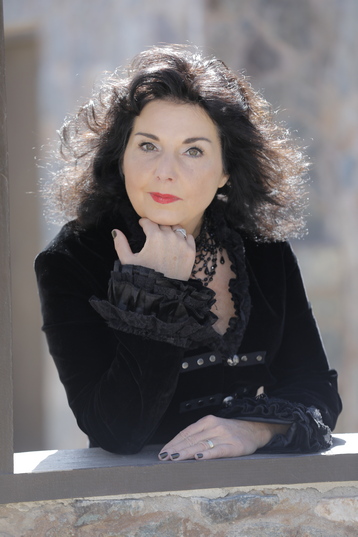
…author and filmmaker, is inspired by the resilience of history’s pioneering women. She creates sweeping sagas that leave readers eager for the next chapter. She is the author of twenty-one novels, many centered on strong female protagonists who confront hardship, mystery, and deception while searching for freedom, love, and a better life.
When she is not writing or researching stories of Western boomtowns, pioneer life, cowboy heroes, and treacherous outlaws, Schneider produces Western films which have won numerous national and international awards. She travels the world and co-writes Western songs.
Thanks for reading! Scroll down to join the discussion.


Excellent post, Manuela! Great topic, well done.
LikeLiked by 3 people