By Jayme H. Mansfield
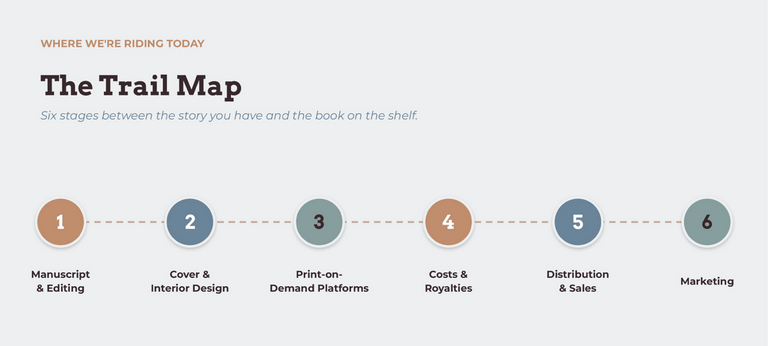
Over the past several years, I’ve ridden several publishing trails and released books the traditional way, independently, and some in between. Each route takes hard work, heart, and grit. There is no shortcut. However, more writers than ever are saddling up to blaze their own path. At this year’s WWW Conference, I had the pleasure of sharing a “trail map” for that journey.
First, Let’s Set the Record Straight
There’s an old notion that “self-published” means “not a real author.” That idea comes from the days of vanity presses and money pits, when indie books often looked the part. Today, independent authors have professional tools, respected platforms, full creative control, higher royalties, and access to millions of readers. Going indie is a legitimate, respected path.
When I work with authors through Cowgirl Publishing, I break the ride into six stages.
1. Your Manuscript Is the Horse You’re Riding
On the ranch where I live in Wyoming, we know no amount of fancy tack fixes a horse that isn’t ready. The same goes for your book. Before you think about covers or platforms, your manuscript has to be sound, and that means professional editing in three passes: a developmental edit for the big picture (structure, pacing, character, and plot), copyediting for line-by-line clarity and consistency, and proofreading to catch stray typos before print.
Skipping professional editing is the number-one mistake that undermines an otherwise good book. When you look for an editor, ask other indie authors for referrals, look for someone who knows your genre, and always request a sample edit on a few of your own pages. Be wary of anyone who won’t offer a sample, is vague about scope or pricing, or promises bestseller status. Editing is usually your biggest single expense, and it’s worth it.
2. Yes, Readers Judge a Book by Its Cover
They do, every single time, and often from a thumbnail no bigger than a postage stamp. A good cover signals genre at a glance, reads clearly at small sizes, and holds its own next to traditionally published books. Don’t forget the spine and back cover. That back-cover copy is its own little marketing document.
Interior design matters, too. Trim size, margins, front matter, and chapter openers quietly whisper (or sometimes shout!) “professional” or “amateur.” Doing it yourself is less expensive and can work well with a good template, but the learning curve is real, and it’s easy to miss what readers in your genre expect. Hiring a designer costs more but saves time and puts one less thing on your shoulders. Know which kind of book you’re riding.
3. Print-on-Demand Changed the Game
Print-on-demand means no warehouse and no garage full of boxes. Your book prints only when someone buys it. That means low financial risk, one finished file for both ebook and print, and the freedom to upload a correction if you spot a typo after launch.
Most authors start with Amazon’s KDP, the front porch of the world’s biggest bookstore. It’s the easiest on-ramp, with enormous reach and ebook, paperback, and hardcover all in one dashboard. The trade-off is a thinner presence in bookstores and libraries. That’s where IngramSpark (IS) comes in, opening the door to thousands of retailers, bookstores, and libraries, including returnable editions. My usual advice is to start on KDP, then add IngramSpark once your book is ready to go wide. Truly, each book project and author is unique. What may be the best option for one author can differ for another.
4. Talking Straight About Costs and Royalties
Plan for editing, cover design, interior formatting, ISBNs, proof copies (order a proof before you hit publish), and author copies for in-person events and sales. Of course, I encourage you to work with a publishing consultant to guide you through the challenges of the ride as you learn the twists and turns of publishing well. You don’t need all the money on day one. Budget by stage, the same way you build the book.
On royalties, KDP ebooks priced between $2.99 and $9.99 earn 70 percent. Outside that range, it’s 35 percent. Print royalties are the list price minus the printing cost, which depends on page count, color vs. B&W, and trim size. A free KDP ISBN ties that edition to Amazon. Buying your own lets your book carry your imprint and travel to other retailers, bookstores, and libraries. IS royalties are calculated a bit differently in that there is a wholesaler discount, etc.
5. Hitch Your Wagon to the Right Distribution
Ebooks give you the widest reach at the lowest production cost. Print brings credibility and is a must for events and signings. Audio is growing fast and is worth planning for once you’re established. Price to compete, but not so low you compete yourself out of a living. Going wide and staying Amazon-exclusive are both valid choices; just know what you’re trading.
6. Blaze the Trail to Your Readers
Start building your platform well before launch day. A mailing list of readers you can reach directly is worth more than a crowd of followers you can’t. For your launch, focus on early reviews, a clear release date, and a strong first week. And find your people. Genre groups, regional writing communities, and conferences like Women Writing the West are where readers and referrals both begin.
Watch for Rattlesnakes
Steer clear of the five most common mistakes I see indie authors make: skipping professional editing, rushing the cover, launching without a marketing plan, pricing too high or too low, and going wide before going deep.
Your Saddlebag Is Packed
You already have the story and the grit. Now you have the know-how, too. And if you’d like a guide for the ride, that’s exactly why I started Cowgirl Publishing. I’d love to partner with you on the journey.
Blaze your trail. We’ll bring the know-how.
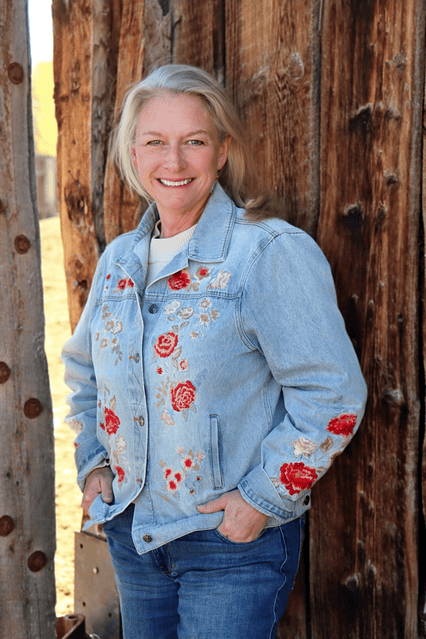
… founder of Cowgirl Publishing, is an author, artist, educator, and self-publishing consultant–cheering you on to live passionately through books and art as we journey together on this wild ride we call life.
Thanks for reading! Scroll down to join the discussion.

